

OTT1265
Applications
Wastewater treatment, environmental protection, and energy conservation.
Target Problems
A continuing sustainability challenge is improving wastewater management while reducing energy demands and increasing energy recovery from waste streams.
Solution
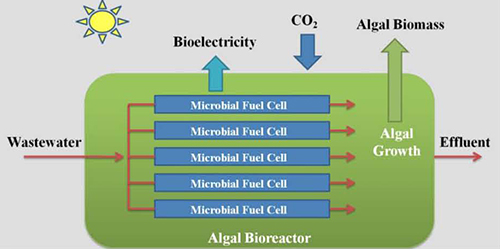
This technology integrates microbial fuel cells (MFCs) with an algal bioreactor to treat wastewater while generating two forms of bioenergy. Organic contaminants are converted into bioelectricity in the MFCs, while remaining nutrients support algal growth for biomass production. By combining wastewater treatment and bioenergy generation in a single system, the technology aims to improve treatment efficiency while recovering valuable energy resources.
Key Benefits
- Produces both bioelectricity and biomass in a single integrated system.
- Reduces energy consumption during wastewater treatment.
- Generates higher bioenergy yields compared to alternative power approaches.
- Removes both organic waste and nutrients using one treatment process.
- Supports wastewater treatment while creating valuable bioenergy products.
About this Technology
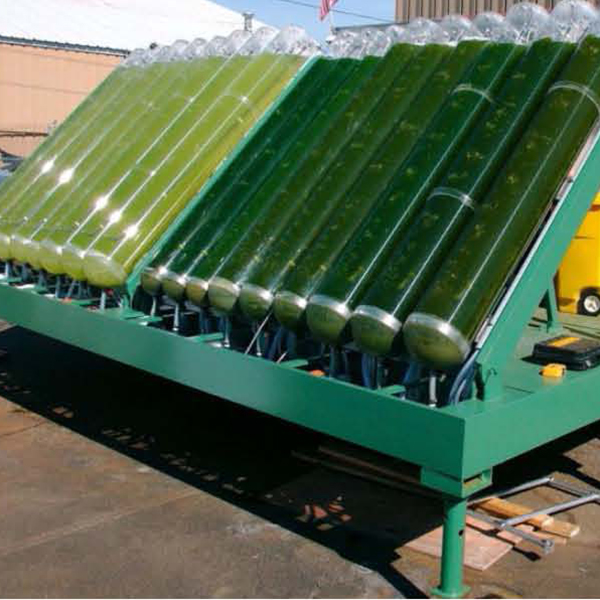
Wastewater is first processed through microbial fuel cells, where organic contaminants are converted into bioelectricity. The remaining nutrient-rich water is then transferred to an algal bioreactor, where algae remove nutrients from the water and produce biomass. The linked processes work together to treat wastewater while generating bioelectricity and algal biomass for potential biofuel production.
Stage of Development
The integrated wastewater treatment and bioenergy production system has been developed.
Partnering Opportunity
We are seeking partners with wastewater treatment companies, environmental technology developers, energy technology companies, and organizations interested in sustainable wastewater management solutions.
Intellectual Property
Issued U.S. Patent 9130216. Protected and managed by the UWM Research Foundation.
Inventor
Dr. Zhen (Jason) He, UWM Former Assistant Professor.