OTT1906
Applications
Therapeutic treatment of tendon, cartilage, wound, lesion, and bone healing through wearable vibration devices.
Target Problems
Wound healing remains a significant clinical and economic challenge, particularly for chronic and complex wounds, which frequently stall during critical phases of repair. This delayed progression can lead to prolonged recovery, increased risk of infection, and higher rates of hospitalization and repeat interventions. Existing treatments often yield inconsistent outcomes and may be costly or difficult for patients to use consistently. Many current approaches are inherently passive, focusing on protection or moisture management rather than actively stimulating the cellular processes required for wound repair, ultimately contributing to delayed healing and suboptimal outcomes.
Solution
UWM researchers have developed a technology that helps patients with chronic and complex wounds achieve faster, more reliable healing by actively stimulating the body’s natural repair processes—reducing delayed recovery and complication risk while improving clinical outcomes—unlike conventional treatments that rely on passive care and often result in prolonged, inconsistent healing.
Key Benefits
-
-
-
- Demonstrated a 40% improvement in healing rates in in-vitro cell cultures
- Power-free operation — eliminates the need for electrical components
- Simplified, lightweight design — reduces system complexity and device weight
- Motion-activated therapy — harnesses natural movement to generate therapeutic vibrations
-
-
About this Technology
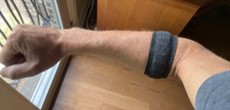
This technology uses embedded vibration elements based on a compact mass-spring system that generates therapeutic stimulation through natural user movement, eliminating the need for external power. Integrated into a flexible, wearable membrane, it delivers targeted mechanical stimulation directly to the treatment area. By actively converting everyday motion into consistent therapeutic input, this approach addresses a major gap in current wound care, moving beyond passive protection to directly stimulate the biological processes required for healing.
Stage of Development
This technology has been tested in the lab and in early human use with working prototypes. Initial animal use and planning for future clinical studies are also underway.
Partnering Opportunity
The inventors have formed a startup, Betastreem, to commercialize this technology and are seeking partners developing wearable therapeutic devices, rehabilitation technologies, or orthopedic treatment solutions.
Intellectual Property (IP)
Patent pending. Protected and managed by the UWM Research Foundation.
Lead Inventors
Daniel J. Schlitz, UWM Research Scientist, Civil Engineering
Priyatha Premnath, UWM Assistant Professor, Biomedical Engineering
Owen Schnieder, UWM Student, Mechanical Engineering